Front end of innovation teams have the
critical role of defining opportunities to populate the innovation pipeline
with winning concepts that drives strategic growth. However, front end teams have needs that must
be addressed. Innovare describes their
needs and provides solutions for optimum front end of innovation performance.
Thursday, October 6, 2016
Front End of Innovation Team Needs Video
Here is our second best practice in the front-end of innovation.
Friday, September 23, 2016
Exciting new wireless power source may drive brain implants to treat Parkinson's disease!

We have been working with clients for a number of years helping them innovate considering the new environment driven by the internet of things (IOT). Following the evolution of core technologies that enable the IOT is a key part of our front-end process.
One of the core technologies enabling the IOT is sensors technology, particularly sensors based on MEMS (micro-electronic mechanical systems) devices. MEMS are tiny devices some no thicker than a human hair and are resonators, antennas, accelerometer, gyroscope, proximity sensors and other devices. These devices are becoming ubiquitous. They are in automobiles, iPhones, Nintendo Wii and many other products that touch our lives daily. They all rely on wired power until now.
Now a team of researchers, led by Boston University College of Engineering (ENG) PhD candidate Farrukh Mateen (ENG'18) and Raj Mohanty, a professor of physics at BU's College of Arts & Sciences (CAS) may transform tiny wirelessly low powered MEMS devices that are efficient and generate low-radiation so they can be used inside the body.

This team is developing breakthrough technology to wirelessly power MEMS devices with one nanowatt of power—that's a billionth of a watt—from three feet away. This technology may enable brain implants to treat neurological disorders like Parkinson's disease.
for more information check out the article in PHYS.ORG.http://phys.org/news/2016-09-wireless-micromachine.htmls
Off course the BU team is not the only group working is this space. Do a google search on "wireless implantable medical devices" and you can start surveying what's going on. This graphic from MIT illustrates a range of applications are envisioned. Go to MIT's IMD Shield page for some of the latest developments http://groups.csail.mit.edu/netmit/IMDShield/
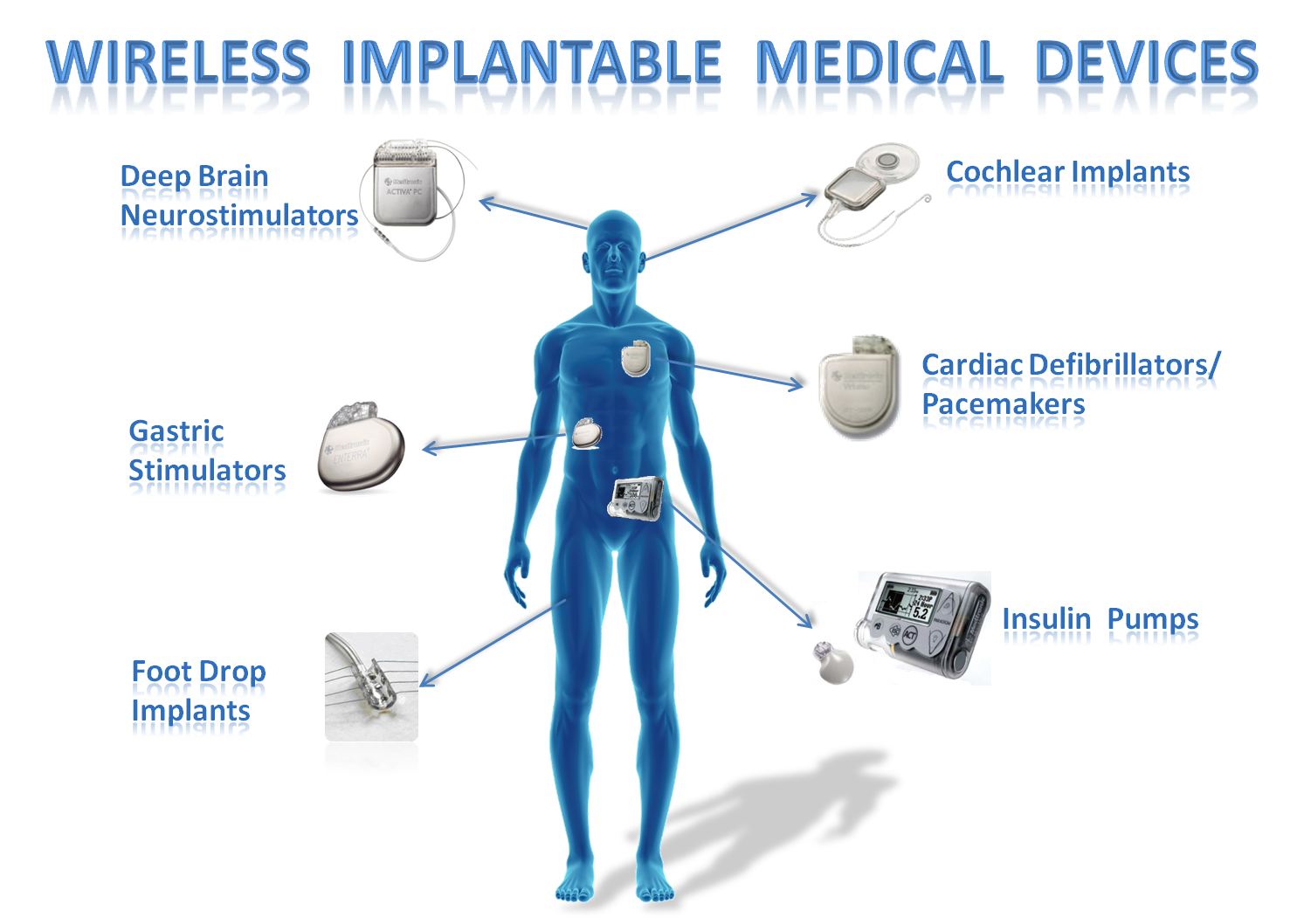
For an overview of wireless communications with implanted medical devices go to:
http://www.ncbi.nlm.nih.gov/pmc/articles/PMC4156009/
Tuesday, April 26, 2016
Introducing Innovare's front-end best practice videos
Innovare is developing a number of videos outlining best practices in the front-end of innovation to help increase innovation success.
Here is the first of the series. It describes how a systematic Discovery is key to developing the strongest concepts to populate the innovation pipeline.
Before brainstorming ideas for new products or technology concepts the most successful front-end teams do their homework! They conduct research and explore customer needs, what's driving their market, and the technology environment so their concepts are focused on solving the right problems. And that increases innovation success.
Before brainstorming ideas for new products or technology concepts the most successful front-end teams do their homework! They conduct research and explore customer needs, what's driving their market, and the technology environment so their concepts are focused on solving the right problems. And that increases innovation success.
Tuesday, June 26, 2012
Beyond Tilting at Windmills
Breaking the “quick fix” innovation cycle through technology discovery

Tight budgets, limited time frames, reduced headcount, quick to market pressures – all are part of the new R and D normal; especially post the great recession. Finding quick answers to today's burning performance problem is systemic and fueled by management's demand for instant reporting.
I'm sure you've seen the symptoms of a constrained innovation environment
- Firefighting with no time to think about underlying problems
- Relying on existing "comfort" models for solutions leveraging what we already know
- Avoiding unknown unknowns - what we don't know we don't know
When constrained we avoid the essential part of the front end of innovation - Discovery
The result? We become self limited innovators
According to Blaine Childress, Sealed Air’s Manager of Open Innovation
"Engineers or scientists limit their search and identify only the defects that can be fixed with some minor change to formulation or process condition and never puts real effort into finding the root of the problem and developing a more fundamental and sustaining solution."
While urgency does drive innovation, when teams choose the quick fix they often overlooks the greater innovation opportunity.
Like Don Quixote and his side kick Sancho, many innovation teams are "tilting at windmills."
- They don't take time for discovery to define the right problems to solve
- They only apply what they already know and is accepted by management
- They extend existing technology rather than considering new approaches and capabilities that might change the game
How to Break the Rules
- Create a forum for Discovery that engages a true multidisciplinary team
- Challenge the team to assemble a strong external perspective, broadening the opportunity space
- Utilize external expertise to reduce R and D costs and time
- Embrace thoughtful consideration of issues and opportunities that go outside what we already know
- Use a team learning and synthesis process to identify value paths to success
A Case Study of Success
This past April, Blaine Childress, Sealed Air’s Manager of Open Innovation and I teamed up to share how we are enhancing Sealed Air's external innovation program at the PDMA's Innovate Carolina conference in Raleigh, NC.
We created a Front End Discovery Forum using Innovare's Tech Explorer approach.
By doing so we shifted their process paradigm to better address customer needs and drive innovation within a resource-constrained environment.
Our presentation describing our approach with real life examples from wind energy, water conservation, and food packaging can be viewed in the following Slideshare.
View it in full screen mode!
Friday, January 27, 2012
Eight Foundations for the Front End of Innovation

How do you know if you have a good front-end of innovation?
- You’re generating lots of ideas
- There’s a steady stream of great concepts coming out that mirror your strategic intent
- The organization is energized by each concept’s potential and is motivated to drive effective implementation
- You are meeting or, better yet, beating your innovation metrics in timing, costs, and profitable growth
- Your current and new businesses follow the life-cycle model that is right for the firm
A good front-end should help the organization achieve these outcomes.
When you talk to managers at companies that have a good front-end in place and look at their processes, you find common ground. Their approaches may have different names, but they share key attributes.
I’ve broken them down into 8 front-end foundations.
- Systematic and repeatable front end process
- Empowered and connected front-end teams with executive sponsorship
- Externally focused organizational learning
- Cross-functional team immersion
- Customer-driven research approach
- Open technology discovery
- Climate for developmental thinking
- Portfolio perspective
Here they are with a little more depth!
Systematic and repeatable front end process - A good front end requires an on-going process rather than periodic ideation when the cupboard is bare. It includes discovery, concept development, and validation phases. It enables sustained innovation by delivering a steady stream of opportunities aligned with strategy.
Empowered and connected front-end teams with executive sponsorship - Small cross-functional teams make up the core of the front end organization. The team has freedom to explore and develop opportunities within prescribed strategic focus areas. Team members have linkage to the business and their functional homes, providing connectivity to the front end. The team is flexible in composition, adding temporary expertise as needed from within or outside the firm. Executive sponsors provide mentoring and resources, as well as organizational blocking and tackling when needed. There is clarity in roles, responsibilities, and decision making within the team and across the organization.
Externally focused organizational learning - Organizational learning is embraced to overcome internally derived paradigms or mental models that limit management’s thinking. The front-end goes beyond what’s already known. They socialize their discoveries and concepts, expanding the range of opportunities in a manner the whole organization can get behind.
Cross-functional team immersion - Deeply imbedding new knowledge within the cross-functional team is critical. Leveraging the diversity of informed minds leads to better problem definition, solution development, and ultimately organizational alignment.
Customer-driven research approach - Building an empathetic understanding of current and emerging customer needs is a central process. The team uncovers new frameworks by listening to the customer’s story. They discover customer need insights that can be merged with market and technology insights to guide innovation.
Open technology discovery - Technology discovery is proactive and connected to customer needs. Anticipating internal and external technology’s impact on the competitive environment, customer needs, and possible solutions allows for faster, innovations with competitive insulation. But there is more to it. Understanding the future impact of science and technology helps the team anticipate latent customer needs. Needs that the customer cannot articulate and may not even realize they have yet. Focusing the innovations towards latent needs creates the opportunity to truly excite customers and transform the market.
Climate for developmental thinking - A non judgmental and safe environment allows the team to create ideas and not kill them too soon. Ideas are nurtured and developed into viable concepts that can withstand the rigor of validation. The developmental thinking environment enhances team creativity, the strength of their new concepts, and the willingness of the organization to adopt and implement their innovations.
Portfolio perspective - The team creates a range of innovation opportunities from close-in changes to existing offerings up through breakthroughs. The portfolio is aligned with strategy, and takes into consideration the needs and timing of the business units and technology availability. As a result, the pipeline is populated with a steady stream of innovations.
Take a look at your front-end.
How many of these foundations does your organization embrace?
Tuesday, August 24, 2010
Too Old to Innovate?

In the digital world we live in, innovation often seems to be the province of the young. If you’re old enough to remember what it was like to have a corded telephone in your kitchen, the popular assumption is that you have too many cobwebs in your head to do any genuinely creative thinking. Happily for those of us who spent our teenage years tethered to a phone jack, a recent flurry of research has confirmed our (often superior) capacity for innovation.
Newsweek recently reported in their article, “The Golden Age of Innovation” that “despite stereotypes of entrepreneurs as fresh-faced youngsters, new research has found that older workers are more likely to innovate than their under-35 counterparts.” Here are a few highlights:
- The highest rate of entrepreneurship in the U.S. is in the 55-64 age group
- People over 55 are almost twice as likely to start a successful business as those 20-34
- Since 1996, the entrepreneurship rate has actually dropped among people under 35
Even within established companies, older workers may be the strongest contributors to innovation. The Newsweek article reports that one German company commissioned an internal review of its continuous improvement system, expecting to justify its early retirement program. The opposite happened. It turned out that older workers’ ideas for process improvements produced significantly higher returns than the ideas offered by younger workers. The early retirement program is being phased out.
So what does this mean for innovation teams? As always, diversity is critical. The most productive teams embrace the contributions from older and younger employees alike. While the younger set may make valuable contributions based on their comparatively recent education in the newest tools and techniques, older workers have years of accumulated expertise in their fields, an understanding of customer needs based on decades of observation and feedback, and, ideally, a willingness to share their knowledge. Employers can encourage this sharing by acknowledging its value. BMW’s mixed-age team and Siemens “cross-mentoring” are attempts to bring younger and older employees together for maximum impact. Perhaps that is only a start.
In this post-recession environment, many workers who had been approaching retirement are now considering staying employed well beyond their previously planned exit dates. “How-to” take advantage of the older workers’ experience, expertise and knowledge, overcome the stereotypes, and drive innovation will be the next challenge for the innovative organization. Organizing, training, and coaching team members and their management sponsors to take advantage of diversity, young and older, should be part of the approach.
Age diversity is a resource that every company aspiring to innovation excellence should embrace.
Tuesday, March 23, 2010
Ideation tip #1 - “How to” turn negative thinking into positive energy
I was at a local PDMA meeting the other night to hear a presentation comparing online ideation to traditional in-person ideation. Most innovation practitioners recognize that online ideation is a compromise. It loses the important socialization that drives ideation success, but it can be an incredible cost-saving tool. Just think about how much it costs to have eight people in a room together for a two-day concept development session. You fly team members in from maybe 4 cities and 2 countries, plus pay hotel bills, car rentals and all the rest.
So while I wouldn't argue the economics, I did take issue with the speaker’s second point, which was that you don't have to worry about someone disrupting your online ideation session with comments like, “that will never work here,” or generally being negative and sapping the energy out of the group.
Sorry, I don’t think that's a good enough reason to use online ideation. Basic facilitation skills and sound creative team process should take care of the team disrupters.
So how do you handle the negative thinker or disruptor during ideation?
 Ideation is essentially creative team problem-solving, which is a social process. It’s about people with different backgrounds and experiences coming together to focus on a problem and create solutions. A good facilitator helps the team by managing the process and establishing the climate for optimum team effectiveness. Part of that is in the planning of the session and part of it takes place during the session itself.
The facilitator works with the team leader before the session to make sure the invited team members bring diversity in thought and are prepared to lend their minds to the team task for the duration of the session. The facilitator provides structure for the session and various creative tools and problem-solving approaches to keep the group on task and productive.
The facilitator establishes the “climate,” which is the collective feeling of the ideation session. He or she keeps the team members open-minded, positively charged, fully engaged and working toward a shared goal. Disruptive team members are encouraged--with diplomacy and skill--to turn their negative thinking around into positive energy for the team.
 Most ideation disruptors are not disrupting because they are jerks.
They disrupt because they have a real concern about something and just don’t have the skills or training to deal with it in a positive manner. There’s something important behind the disruptive outburst. We want to know about the disrupter's concerns so we can address them and make the idea or concept more feasible.
Sometimes it’s as simple as helping the disruptor reframe a concern using positive, action-oriented language. For example, when the disruptor blurts out, “That’s a dumb idea, management would never accept it,” have them restate their concern without the value judgment, as a “how to” problem statement begging for a solution. “My concern with that idea is “how to” make it more acceptable to management.” That sets the team up for a round of creative problem-solving on how to gain management buy-in.
The essence of ideation and creative team problem-solving is first defining the problems, then finding the “how tos” that make the problems go away. When we come up with an idea, we need the concerns to surface. We just need to handle the concerns in a positive, action-oriented way that moves the idea forward and makes it a stronger solution.
So while I wouldn't argue the economics, I did take issue with the speaker’s second point, which was that you don't have to worry about someone disrupting your online ideation session with comments like, “that will never work here,” or generally being negative and sapping the energy out of the group.

Sorry, I don’t think that's a good enough reason to use online ideation. Basic facilitation skills and sound creative team process should take care of the team disrupters.
So how do you handle the negative thinker or disruptor during ideation?
 Ideation is essentially creative team problem-solving, which is a social process. It’s about people with different backgrounds and experiences coming together to focus on a problem and create solutions. A good facilitator helps the team by managing the process and establishing the climate for optimum team effectiveness. Part of that is in the planning of the session and part of it takes place during the session itself.
The facilitator works with the team leader before the session to make sure the invited team members bring diversity in thought and are prepared to lend their minds to the team task for the duration of the session. The facilitator provides structure for the session and various creative tools and problem-solving approaches to keep the group on task and productive.
The facilitator establishes the “climate,” which is the collective feeling of the ideation session. He or she keeps the team members open-minded, positively charged, fully engaged and working toward a shared goal. Disruptive team members are encouraged--with diplomacy and skill--to turn their negative thinking around into positive energy for the team.
Most ideation disruptors are not disrupting because they are jerks.They disrupt because they have a real concern about something and just don’t have the skills or training to deal with it in a positive manner. There’s something important behind the disruptive outburst. We want to know about the disrupter's concerns so we can address them and make the idea or concept more feasible.
Sometimes it’s as simple as helping the disruptor reframe a concern using positive, action-oriented language. For example, when the disruptor blurts out, “That’s a dumb idea, management would never accept it,” have them restate their concern without the value judgment, as a “how to” problem statement begging for a solution. “My concern with that idea is “how to” make it more acceptable to management.” That sets the team up for a round of creative problem-solving on how to gain management buy-in.
The essence of ideation and creative team problem-solving is first defining the problems, then finding the “how tos” that make the problems go away. When we come up with an idea, we need the concerns to surface. We just need to handle the concerns in a positive, action-oriented way that moves the idea forward and makes it a stronger solution.
Subscribe to:
Posts (Atom)